A Comprehensive Cybersecurity Awareness Reference Published May 2026 | Security Awareness Series
Introduction: Why Web Application Security Matters
Web applications are the backbone of modern digital life — from banking portals to e-commerce platforms, healthcare records to government services. Yet they remain among the most frequently targeted surfaces in cybersecurity. According to Verizon's Data Breach Investigations Report, web application attacks consistently rank among the top threat vectors year after year.
SQL Injection (SQLi) alone has been listed on the OWASP Top 10 list of critical web application security risks for over two decades. Despite being well-understood and entirely preventable, it continues to power devastating breaches against organizations of all sizes. The reason is straightforward: developers often prioritize functionality over security, and security is retrofitted — if considered at all — only after an incident occurs.
Security is not a feature to be added. It is a discipline to be practiced from the first line of code.
This article provides a thorough, defense-oriented examination of SQL injection, broader web application vulnerabilities, and the OWASP guidelines that give security practitioners and developers a shared language and framework for building safer systems.
SQL Injection: Understanding the Attack to Build the Defense
What Is SQL Injection?
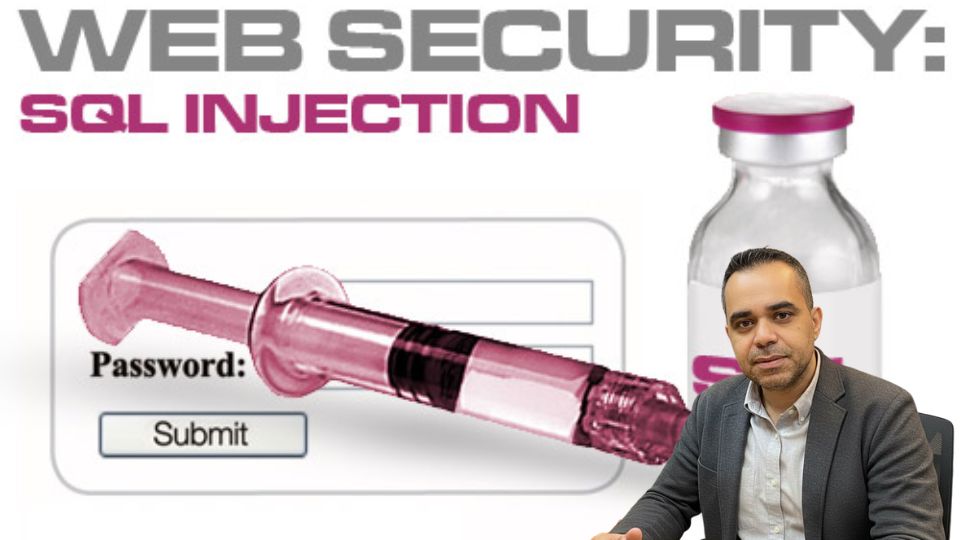
SQL Injection is a code injection technique that exploits insufficient validation of user-supplied input that is embedded in SQL queries. When an application constructs a database query by directly concatenating user input — without sanitizing or escaping it — an attacker can supply malicious input that alters the structure and logic of the query itself.
The result can range from unauthorized data disclosure to complete database compromise, filesystem access, and in some configurations, remote command execution on the underlying server.
How SQL Injection Works: The Conceptual Model
Consider a login form that collects a username and password. A poorly written application might construct a query like this:
SELECT * FROM users WHERE username = '[input]' AND password = '[input]';
If an attacker supplies the input: ' OR '1'='1 as the username, the resulting query becomes:
SELECT * FROM users WHERE username = '' OR '1'='1' AND password = '...';
Since '1'='1' is always true, the query returns all rows in the users table — effectively bypassing authentication entirely. This is the essential mechanic of SQL injection: user-controlled input is interpreted as SQL code rather than as data.
Common SQL Injection Variants
1. In-Band SQLi (Classic)
The most common form. The attacker uses the same channel to both launch the attack and retrieve results. This includes error-based SQLi (exploiting verbose error messages that reveal database structure) and UNION-based SQLi (using the SQL UNION operator to retrieve data from other tables).
2. Blind SQLi
The application does not return query results directly, but the attacker infers information through the application's behavior. Boolean-based blind SQLi observes true/false responses; time-based blind SQLi introduces deliberate delays (e.g., via SLEEP() or WAITFOR DELAY) to infer data one bit at a time.
3. Out-of-Band SQLi
Data is exfiltrated through a different channel entirely — such as DNS lookups or HTTP requests triggered from the database server. This is less common but can bypass monitoring that focuses solely on application traffic.
4. Second-Order (Stored) SQLi
Malicious input is stored in the database in an apparently safe form, then later retrieved and used unsafely in a subsequent query. This is particularly insidious because initial input validation may appear to succeed.
The Real-World Impact of SQL Injection
Understanding the consequences of SQL injection goes beyond theoretical concern. Real-world impacts include:
- Confidential data theft — personal information, financial records, credentials, intellectual property.
- Authentication bypass — gaining administrative access without valid credentials.
- Data manipulation — inserting, modifying, or deleting database records.
- Privilege escalation — leveraging database user permissions to access OS-level functionality.
- Lateral movement — using the compromised database server as a pivot point into internal networks.
- Denial of Service — dropping tables or corrupting data to disrupt operations.
Defensive Strategies Against SQL Injection
1. Parameterized Queries (Prepared Statements) — The Gold Standard
The single most effective defense against SQL injection is the consistent use of parameterized queries (also called prepared statements). In this approach, the SQL query structure is defined separately from the data, and the database driver handles the escaping and binding of parameters at the engine level.
In PHP with PDO (PHP Data Objects), a secure query looks like this:
$stmt = $pdo->prepare('SELECT * FROM users WHERE username = ? AND password = ?');
$stmt->execute([$username, $password]);
The crucial distinction is that the query structure is compiled before any user input is incorporated. The database engine treats the bound parameters strictly as data — not as SQL code — regardless of what characters they contain. A value of ' OR '1'='1 is treated as a literal string, not as SQL logic.
Parameterized queries do not just sanitize input — they fundamentally separate code from data. This is why they are the correct solution, not merely a good one.
2. Stored Procedures
Stored procedures pre-compile SQL logic on the database server. When properly implemented, they can provide an additional layer of separation between application code and database queries. However, stored procedures are not inherently safe — if they construct dynamic SQL internally using string concatenation, they remain vulnerable. The same parameterization principles must apply within the procedure itself.
3. Allowlist Input Validation
Applications should validate that user input conforms to an expected format, type, and range before it is used in any context — database, filesystem, or otherwise. Allowlist validation (defining what is permitted) is far superior to denylist validation (trying to block known bad input), because attackers continuously discover new bypass techniques for denylists.
For example, if a field expects a numeric customer ID, validate that the input is a positive integer. If it expects an email address, validate it against a strict RFC-compliant pattern. Any input that does not conform should be rejected with an appropriate error message — not sanitized and passed through.
4. Least Privilege Principle for Database Accounts
The database user account used by a web application should be granted only the minimum permissions required for the application to function. A typical read-heavy application needs SELECT access on specific tables — not INSERT, UPDATE, DELETE, DROP, or EXECUTE. An account with CREATE FILE or LOAD DATA privileges, for instance, can be leveraged to read from or write to the filesystem.
Separate database accounts should be used for different application roles (read-only reporting vs. transactional operations), and administrative credentials should never be embedded in application configuration files accessible via the web root.
5. Web Application Firewall (WAF)
A Web Application Firewall can inspect incoming HTTP traffic and block requests that match known SQL injection signatures. Modern WAFs use a combination of signature matching, behavioral analysis, and machine learning to detect attacks in transit. However, WAFs are a complementary control — not a substitute for secure code. Sophisticated attackers can craft payloads that bypass WAF rules, particularly if the WAF is not tuned and updated regularly.
6. Error Handling and Information Disclosure
Verbose database error messages should never be displayed to end users in production environments. Error messages that include table names, column names, query fragments, or stack traces provide attackers with the reconnaissance data needed to refine their attacks. Applications should log detailed errors server-side and present users with only generic, non-informative error pages.
7. Regular Security Testing
Security testing must be integrated into the software development lifecycle, not treated as a post-deployment checklist. This includes:
- Static Application Security Testing (SAST) — automated analysis of source code for vulnerable patterns.
- Dynamic Application Security Testing (DAST) — active testing of running applications, including automated SQLi scanning.
- Manual code review — experienced security engineers reviewing code, particularly authentication, data access, and input-handling logic.
- Penetration testing — authorized, structured attempts to exploit vulnerabilities, conducted by skilled testers against defined scope.
Broader Web Application Security Principles
Defense in Depth
No single security control is sufficient. Defense in depth is the principle of layering multiple, independent security controls such that the failure of any single layer does not result in a complete compromise. In web application security, this means combining secure coding practices, network controls, authentication hardening, access controls, monitoring, and incident response planning into a coherent overall posture.
Authentication and Session Management
Weak authentication is consistently among the most exploited vulnerability classes. Best practices include:
- Enforcing strong password policies and supporting passphrase-length credentials.
- Implementing multi-factor authentication (MFA) for all privileged access and ideally all user accounts.
- Using cryptographically secure, server-generated session identifiers — never encoding user identity in predictable client-side tokens.
- Setting appropriate session expiration, idle timeouts, and invalidating sessions server-side on logout.
- Protecting session cookies with the Secure, HttpOnly, and SameSite attributes.
Cross-Site Scripting (XSS)
XSS attacks inject malicious scripts into web pages viewed by other users. Like SQL injection, XSS is fundamentally a failure to separate untrusted data from executable code. Defenses include output encoding appropriate to the context (HTML, JavaScript, CSS, URL), Content Security Policy (CSP) headers that restrict which scripts may execute, and avoiding the use of dangerous functions like innerHTML in favor of safer alternatives like textContent.
Cryptography and Data Protection
Sensitive data must be protected both in transit and at rest. All web traffic should be served over TLS 1.2 or 1.3, with HTTP Strict Transport Security (HSTS) enforced. Passwords must be stored using a purpose-built, adaptive hashing algorithm such as bcrypt, Argon2, or scrypt — never MD5, SHA-1, or unsalted SHA-256. Encryption keys must be managed carefully, rotated regularly, and never stored alongside the data they protect.
Security Headers
HTTP response headers provide an additional layer of client-side protection. Key headers include:
- Content-Security-Policy (CSP) — restricts sources of executable content.
- X-Content-Type-Options: nosniff — prevents MIME type sniffing.
- X-Frame-Options / frame-ancestors — prevents clickjacking.
- Referrer-Policy — controls referrer information disclosure.
- Permissions-Policy — restricts browser API access (camera, microphone, geolocation).
OWASP Top 10: The Security Practitioner's Reference Framework
What Is OWASP?
The Open Web Application Security Project (OWASP) is a nonprofit foundation dedicated to improving software security. Its most widely referenced publication, the OWASP Top 10, is a consensus-based list of the most critical security risks facing web applications, updated periodically to reflect current threat data and industry input.
The OWASP Top 10 serves multiple audiences: it gives developers a concise prioritized list of what to focus on; it gives security teams a common language for communicating risk; and it gives organizations a baseline against which to assess their security posture. The most recent edition (OWASP Top 10 2021) reflects significant changes from prior editions, including new categories and reorganized risk groupings.
OWASP Top 10 — 2021 Edition
A01: Broken Access Control
Now the most common and impactful category, broken access control occurs when restrictions on what authenticated users are permitted to do are not properly enforced. This includes horizontal privilege escalation (accessing another user's data), vertical privilege escalation (accessing administrator functionality), and insecure direct object references (manipulating resource identifiers to access unauthorized records). Defense requires enforcing access control server-side on every request, denying by default, and logging access control failures.
A02: Cryptographic Failures
Formerly classified as 'Sensitive Data Exposure,' this category now focuses explicitly on the cryptographic failures that lead to exposure. This includes transmitting data in cleartext, using deprecated algorithms (MD5, SHA-1, DES, RC4), weak key generation, missing encryption at rest, and improper certificate validation. Defense requires a thorough data classification process to identify what data needs protection, and the application of current cryptographic standards consistently.
A03: Injection
SQL injection remains the defining example of this category, but injection encompasses any scenario where untrusted data is sent to an interpreter as part of a command or query — including OS command injection, LDAP injection, XPath injection, and NoSQL injection. The unified defense is the same: use safe APIs that avoid the interpreter entirely, or parameterize the query so the interpreter cannot misinterpret input as commands.
A04: Insecure Design
This is a new category in the 2021 edition, reflecting the industry's growing recognition that many vulnerabilities originate not in implementation bugs, but in design decisions. Insecure design cannot be fixed by perfect coding — it requires threat modeling, secure design patterns, and security requirements defined before development begins. Examples include business logic flaws, inadequate rate limiting, and missing controls for high-value transactions.
A05: Security Misconfiguration
This is the most commonly found vulnerability in practice. It encompasses missing security hardening, unnecessary features or services left enabled, default credentials unchanged, overly permissive cloud storage permissions, verbose error messages in production, and outdated software. Defense requires a repeatable hardening process, minimal footprint deployments, removal of unused features, and continuous configuration auditing.
A06: Vulnerable and Outdated Components
Modern applications are built on layers of third-party libraries, frameworks, and infrastructure components. Each introduces its own attack surface. When components fall behind on security patches, the application inherits known, publicly documented vulnerabilities. Defense requires continuous software composition analysis (SCA), automated dependency update processes, and removal of unused dependencies.
A07: Identification and Authentication Failures
Formerly 'Broken Authentication,' this category covers failures that allow attackers to compromise passwords, keys, or session tokens. Common issues include permitting weak passwords, missing MFA, credential stuffing vulnerabilities, improper session invalidation, and exposure of session identifiers in URLs. Defense includes MFA, strong credential policies, secure session management, and rate limiting on authentication endpoints.
A08: Software and Data Integrity Failures
This new category addresses assumptions made about software integrity without verification. It covers insecure deserialization (a previous standalone Top 10 entry), CI/CD pipeline integrity, and the use of plugins, libraries, or content from untrusted sources without integrity verification. The SolarWinds supply chain attack is a prominent real-world example of this risk class.
A09: Security Logging and Monitoring Failures
Without adequate logging and monitoring, attacks cannot be detected, contained, or investigated. This category covers insufficient logging of authentication events, access control failures, and high-value transactions; logs not monitored for suspicious patterns; and incident response plans not tested. Defense requires structured logging, centralized log management, alerting on anomalous patterns, and regular tabletop exercises.
A10: Server-Side Request Forgery (SSRF)
SSRF occurs when an application fetches a remote resource based on a user-supplied URL without properly validating or restricting the target. An attacker can cause the server to make requests to internal services, cloud metadata endpoints, or arbitrary external hosts. Defense includes validating and sanitizing all user-supplied URLs, enforcing allowlists of permitted targets, disabling HTTP redirects, and network-level segmentation that limits what the application server can reach.
The OWASP Top 10 is not a checklist to be completed once. It is a living framework that should inform security decisions at every stage of the software development lifecycle — from design through deployment and beyond.
Building a Security-First Development Culture
Shift Left: Integrating Security Earlier
The concept of 'shifting left' in security refers to moving security activities earlier in the development pipeline — closer to the design and coding phases — rather than treating security as a final gate before release. The earlier a vulnerability is discovered and remediated, the less costly it is to fix. A flaw caught during design costs orders of magnitude less than the same flaw discovered after a production breach.
Security Champions Programs
Not every development team can embed a dedicated security engineer. Security champions programs train and empower interested developers within each team to be the local security authority — advocating for secure practices, conducting lightweight threat models, reviewing security-sensitive code, and serving as a bridge to the central security organization.
Developer Security Education
Security education for developers must be practical, contextual, and continuous. Abstract compliance training does not change behavior. Effective programs use realistic examples drawn from the technologies developers actually work with, provide hands-on labs using deliberately vulnerable applications (such as OWASP WebGoat or DVWA in authorized, isolated environments), and tie training to real vulnerabilities discovered in the organization's own codebase.
Responsible Disclosure and Bug Bounty Programs
Organizations should establish clear responsible disclosure policies that allow external security researchers to report vulnerabilities safely and without fear of legal action. Bug bounty programs, where organizations offer financial rewards for valid vulnerability reports, extend their security testing coverage to a global community of researchers and have proven highly effective at surfacing issues that internal teams and automated tools miss.
Conclusion
SQL injection and the vulnerabilities catalogued by OWASP represent not just technical problems, but organizational ones. They persist not because defensive solutions are unavailable — they are well-understood, well-documented, and in most cases straightforward to implement — but because security is consistently deprioritized in favor of speed and feature delivery.
The organizations that build genuinely secure web applications do so because security is embedded in their culture, their processes, and their tooling — not because they apply security measures reactively after an incident. They use parameterized queries as a matter of course. They reference the OWASP Top 10 during design reviews. They maintain their dependencies. They monitor their logs.
Security is, ultimately, a discipline of attention. The techniques in this article are not secrets. They are the accumulated knowledge of a field that has learned, often painfully, what happens when that attention lapses. The goal of security awareness is to ensure that this knowledge is held not just by specialists, but by every person who writes a line of code, configures a server, or makes a design decision that touches user data.
Protecting users is not optional. It is a professional and ethical obligation of everyone who builds the systems they depend on.
References & Further Reading
OWASP Foundation — owasp.org/www-project-top-ten/
OWASP Testing Guide v4.2 — owasp.org/www-project-web-security-testing-guide/
NIST SP 800-95: Guide to Secure Web Services
CWE-89: Improper Neutralization of Special Elements used in an SQL Command — cwe.mitre.org
Verizon Data Breach Investigations Report (DBIR) — verizon.com/business/resources/reports/dbir/
OWASP ASVS (Application Security Verification Standard) — owasp.org/www-project-application-security-verification-standard/
Written by Khalil Shreateh Cybersecurity Researcher & Social Media Expert Official Website: khalil-shreateh.com